
Lead magnet comparisons · 8 min read
Airtable Forms vs Givloh for Lead Magnets
A plain-English comparison for service businesses deciding between Airtable forms and Givloh for resource downloads, email capture, and lead follow-up.
- Airtable forms are useful when a business wants to collect structured responses into an Airtable base.
- Givloh is built for a narrower job: present a resource, capture the email before delivery, send the file, and record the download as a lead.
- Choose Airtable when the form database is the main workflow. Choose Givloh when fast public lead magnet delivery is the main outcome.
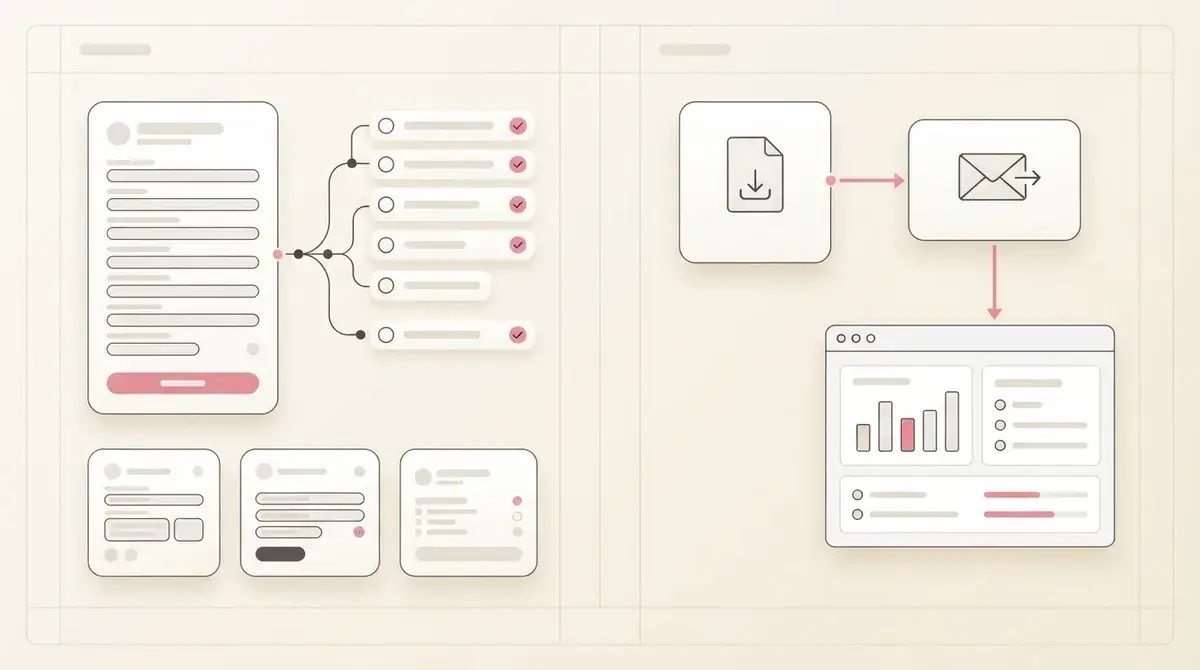
Airtable forms start with structured data collection
Airtable forms let a business create a form, share it with an audience, and send responses into a base. That can be useful for surveys, intake, operations requests, event registration, feedback, and structured internal workflows.
For a service business that already runs Airtable, a form can be a sensible way to collect detailed information. The tradeoff is that the owner needs to design the public experience, decide what happens after submission, manage any file delivery path, and keep the follow-up process clear.
That is why Airtable can be strong for data collection while still feeling heavy for a simple social lead magnet. The business may only want to upload one PDF and capture one email before download.
Use Airtable forms when
- The response database is the main thing you need.
- You already run client or operations workflows in Airtable.
- The form needs several structured fields or conditional details.
- Your team can maintain the base, views, automations, and permissions.
- File delivery and public resource presentation are not the hard part.
Lead magnets need page, file, delivery, and lead context
A lead magnet is not only a form. It needs a public page that explains the resource, an email gate, automatic delivery, a record of which resource was requested, and a follow-up path that makes sense for the service.
Airtable can be part of a custom setup, especially if the business already uses it as a lightweight CRM or operations database. But the business still has to assemble the page, resource hosting, delivery, and reporting flow around the form.
Givloh is intentionally narrower. It gives the service business the hosted resource page, email capture, file delivery, and lead list in one workflow.
Airtable is built around flexible records. Givloh is built around turning a resource request into a service-business lead.
Givloh editorial note
Compare the setup path
The right choice depends on who will maintain the system. If the business has someone comfortable owning Airtable structure, fields, views, and connected delivery, Airtable can support a custom lead capture workflow.
If the owner wants to move from PDF to live capture page quickly, Givloh removes several decisions. The resource page, email gate, delivery, and lead record are part of the product rather than a set of components to assemble.
For another form-based comparison, read Google Forms vs Givloh for lead capture.
Two practical routes
- Airtable: build the form and response table.
- Add the public explanation, resource hosting, delivery process, and follow-up workflow.
- Test permissions, notifications, and handoff steps.
- Givloh: upload the resource, publish the capture page, and share one link.
- Review the lead list by resource after downloads arrive.
Choose based on the primary job
Choose Airtable forms when the business needs rich structured intake or an internal database first. Examples include project applications, client intake, survey responses, field operations, or detailed qualification forms.
Choose Givloh when the first job is simpler: turn a guide, checklist, template, or tool into a public page that captures an email before delivery. The form should be short because the visitor is requesting a resource, not completing a full client intake.
Either way, be clear about what the visitor will receive and how their email will be used. A download request should not silently become unrelated marketing permission.
Use Givloh when you want
- A focused hosted page for one resource.
- Email capture before automatic download delivery.
- A lead record tied to the requested file.
- A single link for social profiles, posts, referrals, and QR codes.
- Less setup than building a page, form, file, automation, and lead list yourself.
Use this as the starting checklist
- Choose Airtable forms for flexible structured response collection.
- Choose Givloh for fast lead magnet capture and delivery.
- Keep the lead magnet form short unless detailed intake is essential.
- Test public page, file access, notifications, and follow-up before sharing.
- Explain clearly how the visitor's email will be used.
References and useful next reading
Givloh
Turn the resource into a lead capture page.
Upload a guide, checklist, template, or tool. Share one link. Capture the email before the download. No Mailchimp, Zapier, Drive permissions, or landing page builder.
Try Givloh freeFAQ
Can Airtable forms be used for lead magnets?
Yes. Airtable forms can collect responses, but the business still needs to handle the public resource page, file delivery, permissions, and follow-up workflow around the form.
When is Airtable better than Givloh?
Airtable is a better fit when structured data collection and an internal database are the main requirements, especially for detailed intake or operations workflows.
When is Givloh better than Airtable forms?
Givloh is a better fit when a service business wants to upload a resource, share one public link, capture an email before delivery, and see the resulting lead without assembling multiple components.