
Social lead generation · 7 min read
Lead Magnet Follow-Up Email for Service Businesses
A practical guide to writing the first follow-up email after someone downloads a checklist, guide, worksheet, or template from a service business.
- The first follow-up email should continue the help promised by the lead magnet, not jump straight into a hard sell.
- Use one useful question, one relevant next step, and clear sender details so the lead knows why they are hearing from you.
- Keep compliance basics in mind, including honest subject lines, sender identity, unsubscribe expectations, and consent rules that apply in your market.
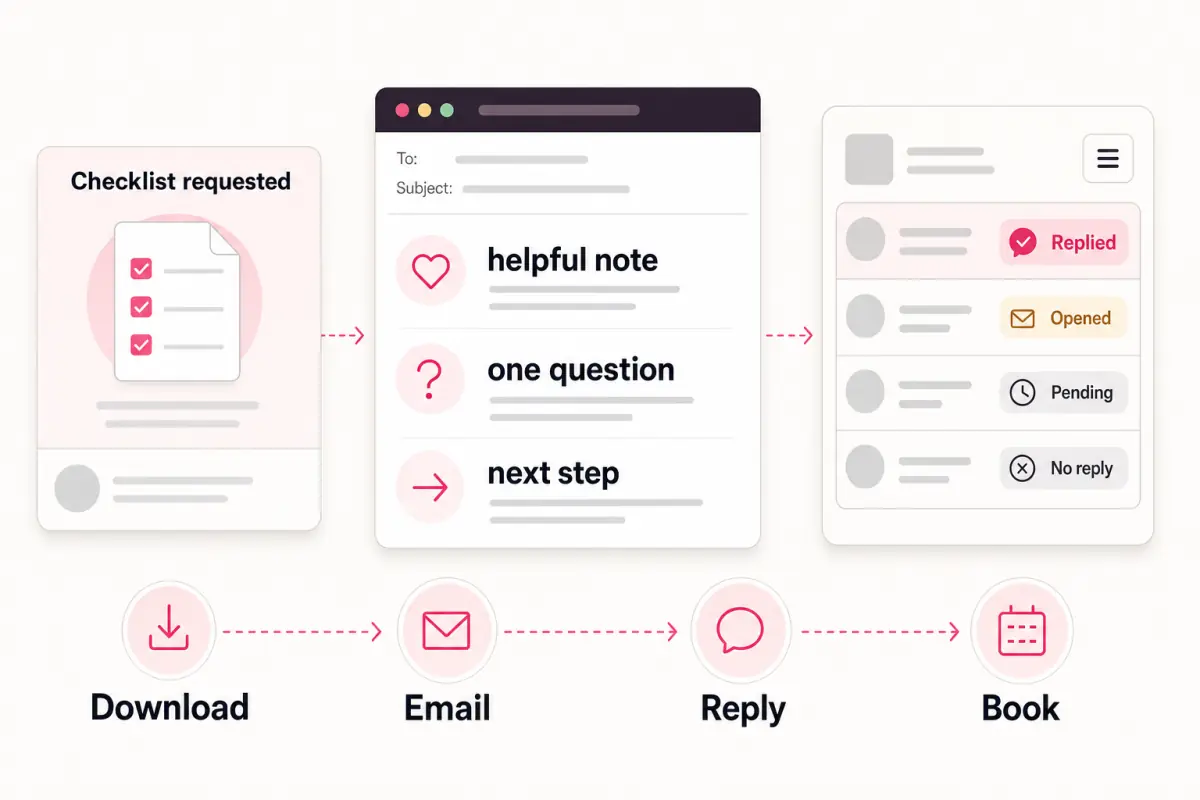
The job of the first follow-up
A lead magnet download is a small hand-raise. The person wanted a checklist, guide, worksheet, or template. They may not be ready to buy today, but they have shown interest in a specific problem.
The first follow-up email should build on that context. It should acknowledge the resource, ask one helpful question, and offer a clear next step if the person wants support.
This is why a generic newsletter welcome email is usually weak. A plumber checklist lead, an accountant worksheet lead, and a recruitment scorecard lead need different first questions.
A good first follow-up should be
- Specific to the resource downloaded.
- Short enough to read on a phone.
- Useful before it is promotional.
- Easy to reply to.
- Clear about who is sending it.
The simple email structure
Start by naming the resource. Then add one sentence that helps the person use it. Then ask one question that reveals whether they need help now. End with one low-friction next step.
For example, a roofer might write: "Thanks for downloading the roof warning signs checklist. If you spotted missing materials, ceiling stains, or blocked gutters, reply with a photo and we will tell you whether it needs a closer inspection."
That email is useful because it matches the resource and makes the reply easy. It does not pretend the download alone is a qualified sales conversation.
Four-part follow-up formula
- Name the resource they requested.
- Give one practical instruction for using it.
- Ask one qualifying question.
- Offer one next step: reply, book, send a photo, or request a quote.
Examples by service business
For a plumber: "If you ticked two or more warning signs, reply with a photo of the issue and we will tell you whether it needs urgent attention."
For an accountant: "If you are using the record-keeping checklist for year-end, reply with your business type and deadline month and we will suggest what to gather first."
For a physiotherapist: "If you downloaded the first-appointment checklist, reply with whether you are preparing for pain, injury recovery, or return to exercise. We can point you to the right booking option."
For a recruitment agency: "If you are using the interview scorecard, reply with the role you are hiring for and we will suggest the first three criteria to include."
The best follow-up sounds like a helpful reply, not a campaign blast.
Givloh editorial note
What to avoid
Avoid sending the same sales pitch to every download. The resource gives you context, so use it. Avoid five-call-to-action emails that ask the lead to book, buy, follow, review, and forward at once.
Also avoid hiding who the email is from or using a subject line that overstates the relationship. The lead should understand why they are receiving the message and what they can do next.
If the email is marketing, check the rules that apply where the business operates. In the US, CAN-SPAM sets requirements for commercial email. In the UK, PECR and ICO guidance matter for electronic marketing. This page is practical marketing guidance, not legal advice.
Simple restraint rules
- Use a truthful subject line.
- Make the sender clear.
- Respect unsubscribes and consent expectations.
- Do not bury the useful next step.
- Do not turn the first email into a long sequence pitch.
How Givloh fits
Givloh captures the email before the resource is delivered and shows the lead in a dashboard. That gives the service business the context it needs to send a better follow-up.
Start with one resource and one follow-up. If it produces replies, create a second resource for the next most common customer question. The lead magnets library is the best place to find more starting points.
Use this as the starting checklist
- Write a follow-up for each resource, not one generic email.
- Ask one useful question tied to the download.
- Offer one clear next step.
- Keep the email short enough for mobile reading.
- Check applicable email marketing rules before scaling.
References and useful next reading
Givloh
Turn the resource into a lead capture page.
Upload a guide, checklist, template, or tool. Share one link. Capture the email before the download. No Mailchimp, Zapier, Drive permissions, or landing page builder.
Try Givloh freeFAQ
What should I email after someone downloads a lead magnet?
Send a short email that names the resource, helps them use it, asks one relevant question, and offers one next step.
Should the first lead magnet follow-up be a sales email?
It should be useful first. A direct next step is fine, but the email should match the problem behind the download.
How many follow-up emails should a service business send?
Start with one strong follow-up tied to the resource. Add more only when you know the first email is producing replies or bookings.