
Profession playbooks · 7 min read
Solicitor Email List Building Guide
A cautious guide for solicitors and law firms that want to use helpful guides and checklists to capture enquiries while respecting professional marketing obligations.
- Solicitors can build an email list by offering practical, general-information resources that help people prepare for an enquiry.
- Good first resources include consultation prep checklists, document checklists, process explainers, and question lists for common service areas.
- The resource should stay general, be reviewed against the firm's professional obligations, and lead to a proper consultation when advice is needed.
Why law firm list building needs restraint
A law firm should not copy aggressive ecommerce lead generation tactics. Legal services depend on trust, clarity, and professional obligations. That does not mean a solicitor cannot offer useful resources. It means the resource should be practical, accurate, and careful about what it promises.
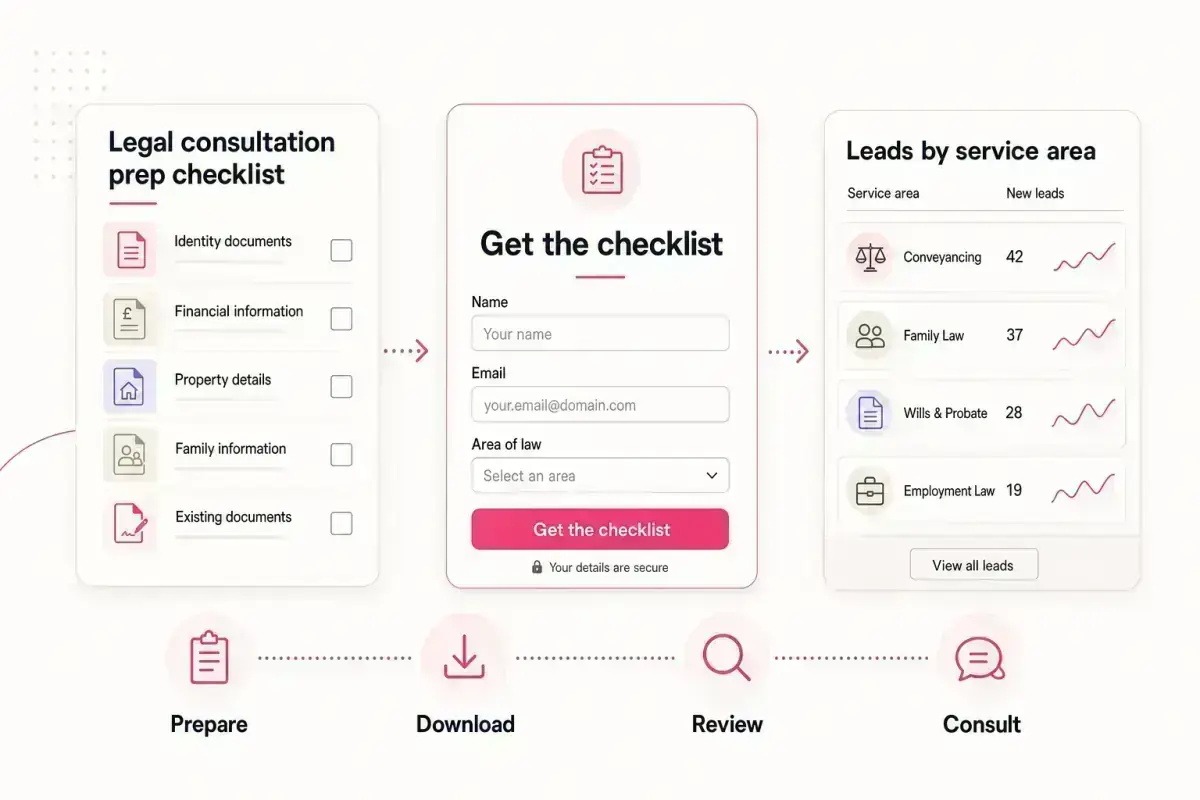
The strongest first lead magnets help people prepare. A conveyancing checklist, probate document list, employment consultation prep sheet, or family-law first-call question list can all be useful without trying to give tailored legal advice in a download.
The goal is to help someone take the next sensible step: understand what to gather, what to ask, and when to speak to a solicitor.
Good legal lead magnets are
- General information, not personalised advice.
- Specific to one service area.
- Useful before the first call.
- Clear about when to seek professional advice.
- Reviewed through the firm's normal compliance process.
Choose a service-area resource
Start with one service area instead of writing a broad legal guide. A conveyancing firm might offer a moving-home document checklist. An employment solicitor might offer a redundancy consultation prep sheet. A private client team might offer a probate document checklist.
The narrower the resource, the easier it is to write clearly. It also tells the firm what the lead may need help with, which makes follow-up more relevant.
If the firm serves local clients, the resource can be shared from the website, LinkedIn, Google Business Profile updates, and any social bio link where the firm already receives attention.
Simple resource structure
- Name the service-area problem.
- List documents or questions to prepare.
- Explain what the checklist does and does not cover.
- Add a clear prompt to book or request a consultation.
- Review the final wording before publishing.
Follow up without overreaching
The first follow-up should not assume the person is ready to instruct the firm. It should connect to the resource and offer a clear next step.
For example: "You downloaded our probate document checklist. If you are gathering papers for an estate, you can reply with one question or book a first call with the team."
That is specific and useful. It does not create pressure or promise an outcome. It moves the person from anonymous interest to a proper professional conversation.
The resource should make the first legal conversation clearer, not try to become the legal conversation.
Givloh editorial note
How Givloh fits
Givloh gives the firm a hosted resource page, short email gate, automatic file delivery, and lead dashboard. That means the firm can share one link to one useful resource without building a separate landing page and delivery workflow.
The copy, resource, and follow-up still need to match the firm's professional duties. Givloh handles the lead capture mechanics; the firm remains responsible for the substance of its legal marketing.
For another regulated-service example, see the financial adviser consultation checklist.
Use Givloh for the mechanics
- Host the checklist or guide.
- Capture the email before download.
- Deliver the file automatically.
- Show the lead in one dashboard.
- Keep the firm's compliance review around the resource and follow-up.
Use this as the starting checklist
- Pick one legal service area.
- Keep the resource general and preparation-focused.
- Avoid outcome promises or personalised advice in the PDF.
- Review copy through the firm's normal process.
- Follow up with one relevant consultation next step.
References and useful next reading
Givloh
Turn the resource into a lead capture page.
Upload a guide, checklist, template, or tool. Share one link. Capture the email before the download. No Mailchimp, Zapier, Drive permissions, or landing page builder.
Try Givloh freeFAQ
Can solicitors use lead magnets?
Yes, if the resource is useful, accurate, carefully worded, and consistent with the firm's professional and marketing obligations.
What is a good lead magnet for a solicitor?
A service-area preparation checklist works well, such as a conveyancing document checklist, probate document list, or employment consultation prep sheet.
Should a legal lead magnet give advice?
It should usually stay general and preparation-focused. Personalised legal advice belongs in a proper solicitor-client process.