
Lead magnet strategy · 8 min read
How to Turn a Client Intake Form Into a Lead Magnet
A practical guide for service businesses that want to turn intake questions into a useful download that captures better-fit enquiries before a first call.
- A client intake form can become a lead magnet when it helps the visitor prepare before they ask for a quote or consultation.
- The public download should be a short preparation checklist or worksheet, not the full internal form the business uses after someone becomes a client.
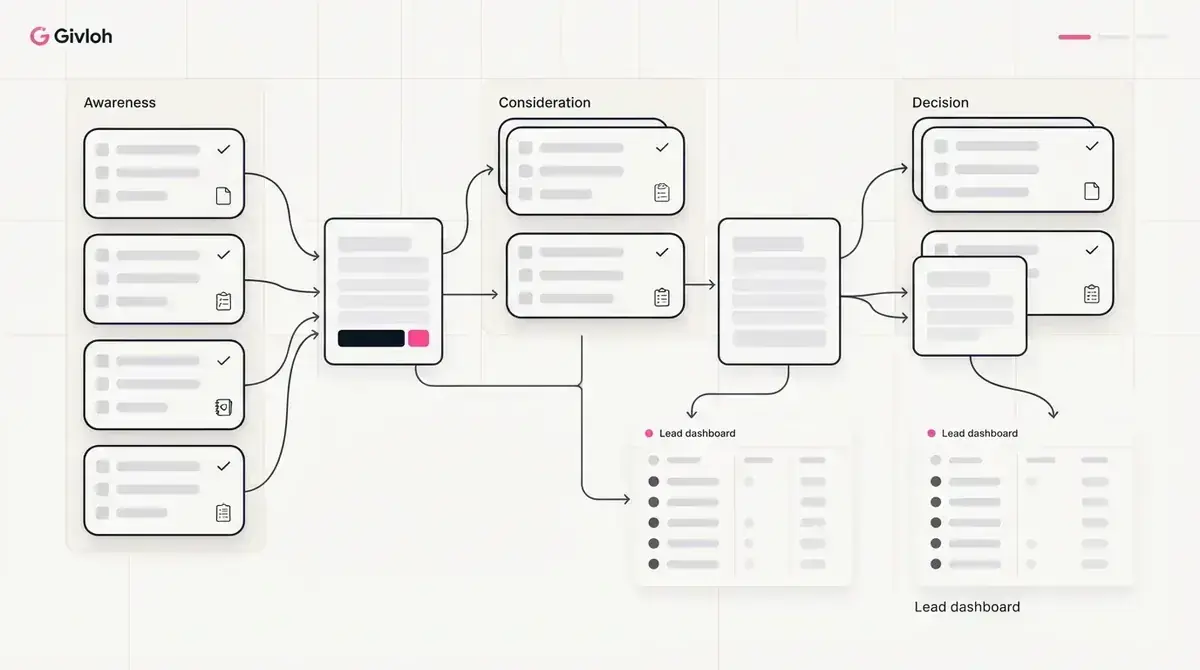
- Givloh gives the service business one page for the resource, captures the email before delivery, and records which intake topic started the enquiry.
Start with the questions you already ask
Most service businesses already have the raw material for a useful lead magnet. It lives in the intake form, quote request form, discovery call notes, or first email thread. The business asks the same questions because every good job needs the same context before it can be priced, scoped, or advised on properly.
The lead magnet version should not copy the whole internal form. A full intake form can feel too heavy for a social visitor who is still researching. Turn the early questions into a preparation resource: what to gather, what to decide, what photos or measurements might help, and what the provider needs to know before giving sensible advice.
This pairs well with how to turn a quote request form into a lead magnet when the business wants a softer step before asking for project details.
Good intake questions to reuse
- What problem prompted the enquiry.
- What deadline, event, move date, launch date, or appointment date matters.
- What the customer has already tried or ruled out.
- What information, photos, documents, access, or measurements may be needed.
- What outcome would make the first conversation useful.
Make the download useful before the sale
A strong intake-based lead magnet helps the reader arrive prepared. It should not feel like homework for the business owner. It should reduce uncertainty for the visitor and make the next step easier if they decide to speak to the service provider.
For a roofer, that might be a roof issue photo checklist. For a bookkeeper, it might be a records preparation worksheet. For a therapist, it might be a first-session questions guide that avoids sensitive detail in the first public form. For a web designer, it might be a website goals worksheet.
Keep the title plain. "What to prepare before your first [service] call" is clearer than a vague guide about transformation or growth.
The intake form is for the provider. The lead magnet version is for the person deciding whether to ask for help.
Givloh editorial note
Keep the public form short
The downloadable resource can mention useful preparation details, but the public capture form should stay light. Email is enough for many first downloads. If the business needs more detail, ask one qualifying question at most, such as service type or location.
Long intake questions belong after the file delivery, when the person has asked for a quote, consultation, assessment, or call. That sequence respects the visitor and gives the business cleaner intent signals.
For page mechanics after the resource is chosen, use the structure in how to turn a checklist into a lead capture page.
Simple build sequence
- Copy the recurring questions from the intake or discovery process.
- Remove anything private, sensitive, or only needed after someone becomes a serious enquiry.
- Group the remaining questions into a checklist or worksheet.
- Upload the resource to Givloh and publish the email-gated page.
- Follow up by asking whether the reader wants help with the situation they prepared for.
Use the download to route follow-up
An intake-based resource tells the business what kind of problem the reader is preparing for. A project brief worksheet means something different from a first-call checklist. A records prep sheet means something different from a pricing guide.
The first follow-up should connect to the exact resource. Send the file, ask what prompted the download, and offer the smallest relevant next step. That could be a quote request, a short call, an assessment, a document review, or a paid consultation.
Givloh fits because the resource, delivery, lead record, and analytics sit together. The business does not need a separate form tool, file host, email tool, and manual spreadsheet before it can test the idea.
Useful follow-up routing signals
- Resource topic and service category.
- Location or service area when relevant.
- Timing and urgency.
- Whether the reader is preparing, comparing, or ready to request help.
- Which next step fits the service: quote, call, assessment, review, or consultation.
Use this as the starting checklist
- Use real intake questions the business already asks.
- Turn early questions into a preparation checklist or worksheet.
- Keep sensitive and detailed intake for later in the sales process.
- Ask only for email before the first download unless one qualifying field is essential.
- Follow up based on the exact intake topic the reader requested.
References and useful next reading
Givloh
Turn the resource into a lead capture page.
Upload a guide, checklist, template, or tool. Share one link. Capture the email before the download. No Mailchimp, Zapier, Drive permissions, or landing page builder.
Try Givloh freeFAQ
Can a client intake form be a lead magnet?
Yes, if it is rewritten as a short preparation checklist or worksheet that helps the reader get ready before a quote, call, consultation, or assessment.
Should the download include every intake question?
No. Keep the public resource focused on early preparation. Detailed, private, or sensitive questions should stay in the later intake process.
How should a service business follow up after this download?
Deliver the file, ask what prompted the download, and offer the next step that matches the resource topic, such as a quote, call, review, or assessment.