
Lead magnet strategy · 8 min read
How to Turn a Risk Assessment Checklist Into a Lead Magnet
A careful guide for service businesses that want to turn safety, preparation, or compliance checklists into useful email-gated resources.
- A risk assessment checklist can work as a lead magnet when it helps a prospect prepare for a service conversation, site visit, lesson, appointment, or project.
- The checklist should stay practical and bounded: help the reader spot what to gather, ask, and review without replacing professional judgement or legal advice.
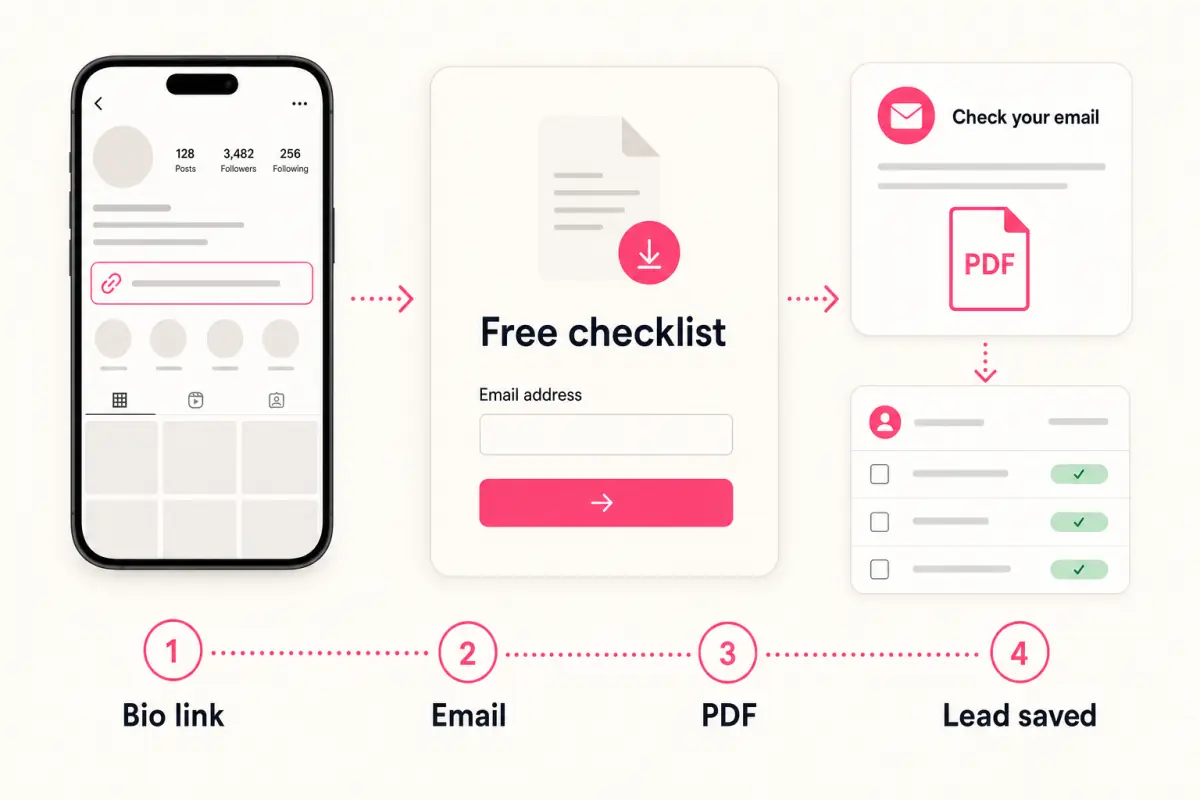
- Givloh lets the business host the checklist, capture the email before delivery, and follow up based on the risk or preparation topic the prospect selected.
Use risk as a preparation topic
Many service businesses already help customers reduce risk. A builder talks about site access and project disruption. A cleaner talks about premises access. A physiotherapist talks about safe preparation before an appointment. A music teacher talks about first-lesson expectations. A consultant talks about project readiness.
Those conversations can become a careful checklist. The goal is not to publish a legal compliance manual. The goal is to help a prospect prepare for a safer, clearer first conversation.
This sits naturally beside how to turn a site visit preparation checklist into a lead magnet when the service involves property, equipment, appointments, or people.
Good risk-checklist angles
- Questions to ask before booking a service visit.
- Photos, measurements, documents, or access notes to prepare.
- Warning signs that mean the customer should stop guessing and call a professional.
- Safety boundaries for what the customer should not attempt alone.
- What the business needs to know before giving a quote or recommendation.
Keep the checklist inside its lane
A risk assessment checklist needs careful language. It can help the reader organise information and notice obvious issues. It should not claim to certify, diagnose, insure, approve, or guarantee anything without a qualified review.
The Health and Safety Executive's risk assessment guidance is a useful reminder that risk management includes identifying hazards, assessing risks, controlling risks, recording findings, and reviewing controls. A service-business lead magnet can borrow that practical structure without pretending to replace formal duties.
If the business operates in a regulated or safety-sensitive area, review the wording before publishing.
The checklist should make the first conversation better, not make the reader think the professional is optional.
Givloh editorial note
Build it around one decision
Thin risk content happens when the page tries to cover every possible hazard. Choose one decision instead: is my home ready for a survey, what should I check before a first Pilates class, what should a landlord prepare before a property inspection, or what information does a consultant need before a discovery call?
A simple structure is enough: what to look at, what to prepare, what to avoid, when to ask for help, and what happens next.
For another narrow resource type, see how to turn a troubleshooting guide into a lead magnet.
Simple checklist outline
- Name one risk, preparation, or readiness decision in plain language.
- List what the reader can safely observe or gather.
- Separate preparation steps from professional judgement.
- Add stop points where the reader should contact the business.
- End with a low-pressure next step such as ask a question, request a quote, or book an assessment.
Follow up from the risk topic
The topic of the download gives the business useful context. A person requesting a home access checklist needs a different reply from someone requesting a health preparation sheet or a project risk questionnaire.
Use the first reply to ask one practical question. What date are they planning for, what property type is involved, what service are they considering, or what concern made them download the checklist?
Givloh keeps the resource request attached to the lead, so the business can follow up from the actual problem instead of sending the same message to everyone.
Useful follow-up segments
- Risk topic or service category.
- Stage: early research, preparing for a visit, comparing providers, or ready to book.
- Location, property type, appointment type, or project scope.
- Urgency and deadline.
- Preferred next step: question, quote, assessment, consultation, or call.
Use this as the starting checklist
- Choose one practical preparation or risk topic.
- Avoid certification, diagnosis, guarantee, legal, or regulated claims unless reviewed.
- Keep the checklist useful before a quote, visit, lesson, appointment, or consultation.
- Use Givloh to capture the email before delivering the PDF.
- Follow up based on the risk topic the person requested.
References and useful next reading
Givloh
Turn the resource into a lead capture page.
Upload a guide, checklist, template, or tool. Share one link. Capture the email before the download. No Mailchimp, Zapier, Drive permissions, or landing page builder.
Try Givloh freeFAQ
Can a risk assessment checklist be a lead magnet?
Yes. It works when it helps a prospect prepare for a service decision, gather useful details, understand safe boundaries, and know when to contact the business.
What should a risk checklist avoid?
Avoid claims that certify, diagnose, guarantee, approve, or replace professional judgement. Keep the checklist focused on preparation and useful questions.
How should a business follow up after the download?
Ask one practical question about the topic, timing, property, appointment, or project that made the person request the checklist.