
Tutoring lead generation · 8 min read
Tutor Email List Building Guide
A practical email list building guide for tutors and tutoring businesses using parent guides, assessment prep resources, and careful follow-up.
- Tutors can build an email list by offering useful planning resources to parents, carers, adult learners, or students who are researching support.
- The safest first lead magnet helps the reader prepare for a consultation, understand options, or organise learning goals without making exaggerated outcome promises.
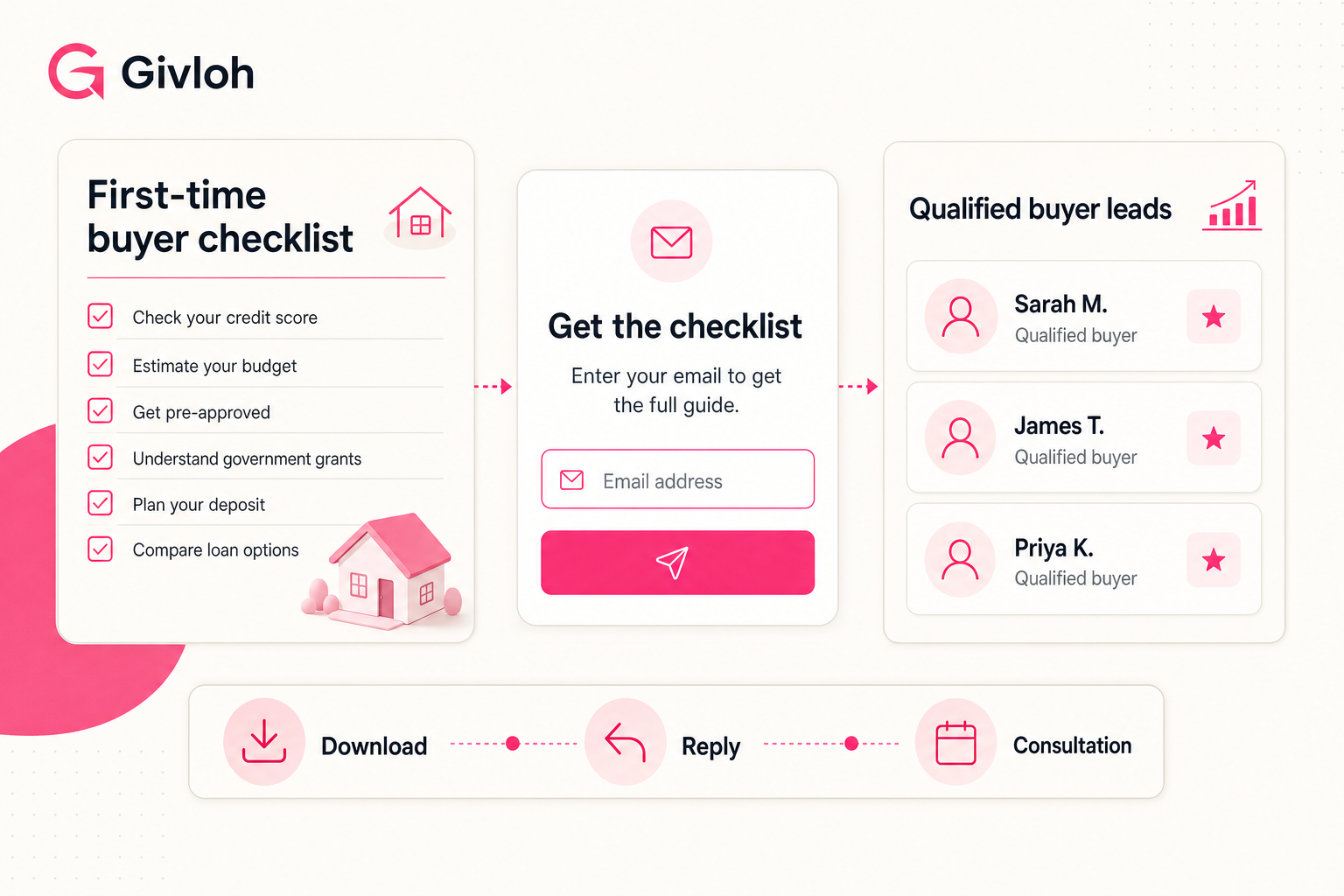
- Givloh gives the tutor one link to share, captures the email before delivery, and records which tutoring topic prompted the enquiry.
Pick a resource around readiness, not guarantees
Tutoring decisions are often personal and time-sensitive. A parent may be worried about confidence, exam preparation, missed learning, homework stress, or whether one-to-one support is the right fit. An adult learner may want a clearer route before booking lessons.
A useful lead magnet helps them prepare for the next conversation. It should not promise grades, results, or outcomes. It should help the reader organise goals, current challenges, availability, subject needs, learning preferences, and questions for the tutor.
The same principle appears in other professional-service guides: give the reader a useful preparation step, then use the download to start a more specific conversation.
Useful tutor lead magnets
- First tutoring consultation preparation checklist.
- Exam revision planning worksheet.
- Parent questions to ask before choosing a tutor.
- Learning goals and confidence tracker.
- Subject-support handover sheet for a first session.
Keep safeguarding and privacy front of mind
If the tutoring business works with children or young people, the lead magnet should respect safeguarding, privacy, and appropriate communication routes. It should not ask for unnecessary sensitive information through a public download form.
Keep the initial capture simple. Email may be enough before delivery. Detailed information about a learner, school, needs, or family circumstances can be handled later through an appropriate intake process and with the right adult involved.
Where children are involved, use current safeguarding guidance for the tutor's location and operating model. A marketing resource should never replace professional safeguarding policies or direct advice.
A tutoring lead magnet should make the first conversation clearer without collecting more personal detail than the moment requires.
Givloh editorial note
Share the resource where trust already exists
Tutors can share a resource from Facebook Pages, local parent groups where allowed, Instagram profiles, school-community referrals where appropriate, email signatures, LinkedIn posts for adult learning or professional exams, and printed flyers with a QR code.
The caption should connect to a real concern. For example: "Not sure what to ask before choosing a maths tutor? I made a short parent checklist for the first call." That is more useful than a generic lesson availability post.
For another education-adjacent service page structure, adapt the same page mechanics used in how to turn a checklist into a lead capture page.
Simple tutor list-building workflow
- Choose one learner type, subject, or decision moment.
- Create a short preparation checklist or planning worksheet.
- Upload the resource to Givloh.
- Share one link from the relevant social profile, post, referral, or flyer.
- Follow up by learner type, subject, goal, timing, and appropriate contact route.
Segment follow-up by learning need
A revision planner download may indicate a near-term exam. A first-call checklist may indicate early research. A confidence tracker may indicate a softer support need. Treat each download as context rather than sending the same generic pitch to everyone.
The first follow-up should deliver the file, ask what prompted the download, and offer a restrained next step such as availability, a consultation, or a short suitability conversation. Keep claims careful and avoid implying guaranteed academic outcomes.
Givloh fits because the tutor can see which resource started the lead and reply with the right subject, level, and timing context instead of guessing.
Useful tutor lead segments
- Parent or carer researching support for a child.
- Adult learner researching lessons or professional exams.
- Subject area and level.
- Exam date, school term, or learning deadline.
- Confidence, catch-up, revision, homework, or skill-building need.
Use this as the starting checklist
- Choose one learner type, subject, or decision moment.
- Use preparation and planning resources rather than outcome promises.
- Avoid unnecessary sensitive data in the first public form.
- Follow safeguarding and privacy guidance for the tutor's operating location.
- Follow up by subject, level, timing, goal, and appropriate contact route.
References and useful next reading
Givloh
Turn the resource into a lead capture page.
Upload a guide, checklist, template, or tool. Share one link. Capture the email before the download. No Mailchimp, Zapier, Drive permissions, or landing page builder.
Try Givloh freeFAQ
What lead magnet works for a tutor?
A first consultation checklist, exam revision planner, parent questions guide, learning goals worksheet, or subject-support handover sheet can help readers prepare before booking.
Should tutors promise grade improvements in a lead magnet?
No. Keep the resource useful and careful. Focus on preparation, goals, questions, and next steps rather than guaranteed grades or outcomes.
How should tutors follow up after a download?
Deliver the file, ask what prompted the download, clarify subject, level, timing, and goals, and use an appropriate contact route, especially when children are involved.