
Lead magnet strategy · 8 min read
How to Turn a Consultation Questionnaire Into a Lead Magnet
A practical guide for service businesses that want to turn pre-call questions into a useful email-gated resource and better qualified enquiries.
- A consultation questionnaire becomes a lead magnet when it helps the prospective client prepare before they are ready to book.
- The best version is short, specific to one service decision, and written as preparation rather than a long intake form.
- Givloh gives the business one hosted page, captures the email before delivery, and stores the resource context for follow-up.
Turn the questions into preparation
Many service businesses already ask useful questions before a consultation: goals, current situation, budget range, timeline, documents, property details, health context, project scope, or preferred outcome. Those questions can become a useful resource before the person is ready to book.
The key is to make the questionnaire feel like preparation, not homework. A prospective client should finish it knowing what to think about before a call and whether the business is likely to be a fit.
This sits between how to turn a client intake form into a lead magnet and how to use a lead magnet to qualify service enquiries.
Good questionnaire angles
- Discovery call preparation for consultants and agencies.
- Project brief preparation for designers, architects, and fitters.
- Appointment preparation for clinics and wellness businesses.
- First consultation questions for legal, finance, and property services.
- Quote preparation for home service businesses.
Keep it shorter than the real intake form
A lead magnet questionnaire should not collect everything the business needs after the client is ready to buy. It should help the reader organise their thoughts and help the business identify context for the first reply.
Aim for one page or a short worksheet. Ask about the problem, the desired result, the timing, any constraints, and the one question the reader most wants answered. Save detailed operational fields for the real onboarding process.
Google's helpful content guidance is a useful standard here: the resource should be made for the reader first. A questionnaire that feels like a disguised sales form will not earn many downloads.
The lead magnet version should make the first conversation easier, not replace the real consultation.
Givloh editorial note
Build the capture page around one service decision
Do not publish one broad questionnaire for every possible service. A better page names the specific decision: prepare for a kitchen renovation quote, plan a bookkeeping clean-up call, brief a marketing agency, or get ready for a first mortgage conversation.
With Givloh, the business uploads the worksheet, writes a plain explanation, and shares one link from social posts, email signatures, partner referrals, and direct messages. The visitor enters an email before the file is delivered.
That is stronger than sending a public document link because the business knows who requested the worksheet and what topic created the lead.
Simple questionnaire workflow
- Choose one consultation type or service decision.
- Turn the five to eight most useful pre-call questions into a worksheet.
- Upload the PDF to Givloh and publish the capture page.
- Share the link from posts, profiles, email signatures, QR codes, and partner messages.
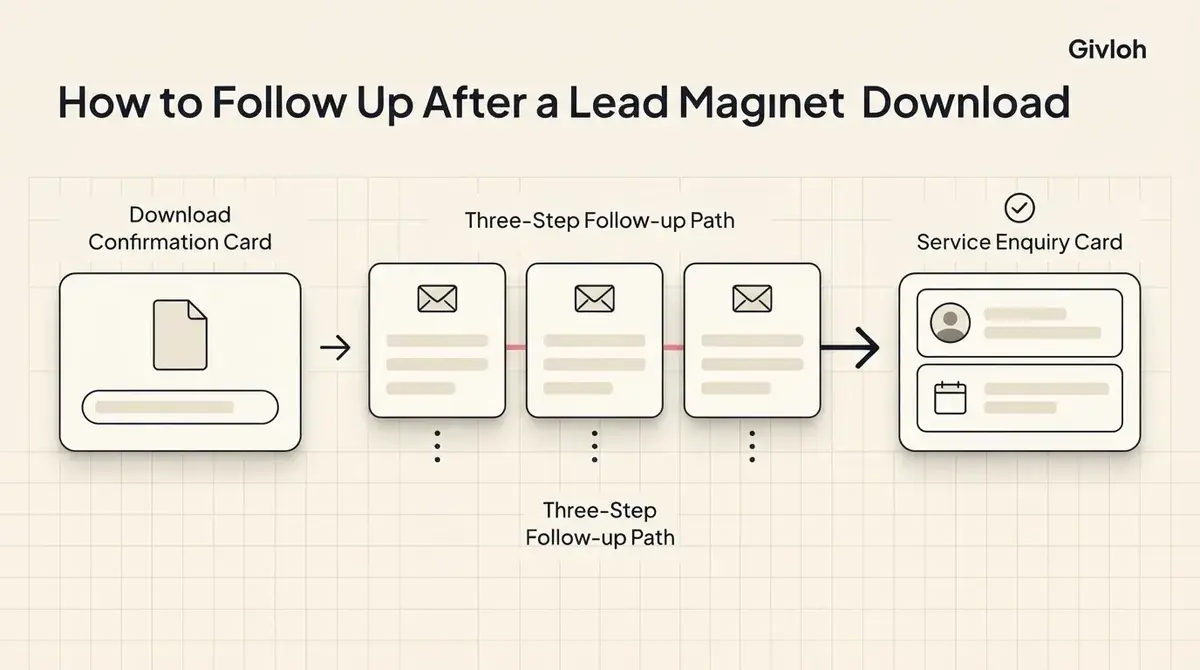
- Follow up with one question based on the worksheet topic.
Use the answers to improve the first reply
The first follow-up should mention the questionnaire and ask a practical next-step question. For example, an agency might ask whether the person wants help prioritising the brief. A mortgage broker might ask where they are in the buying process. A cleaner might ask for property size and preferred timing.
The point is context. Someone who downloads a preparation worksheet has already signalled a problem area. The business can use that context without pretending the person is ready for a sales call immediately.
For a broader system, connect this page with how to follow up after a lead magnet download and how to segment leads by resource download.
Useful follow-up fields
- Service type or consultation topic.
- Timeline and urgency.
- Budget range or decision stage when appropriate.
- Main concern or obstacle.
- Preferred next step and contact method.
Use this as the starting checklist
- Choose one service decision, not a generic all-purpose questionnaire.
- Keep the lead magnet version short enough to complete quickly.
- Frame the resource as preparation, not a disguised sales form.
- Use Givloh to capture the email before delivering the worksheet.
- Follow up with one practical question tied to the worksheet topic.
References and useful next reading
Givloh
Turn the resource into a lead capture page.
Upload a guide, checklist, template, or tool. Share one link. Capture the email before the download. No Mailchimp, Zapier, Drive permissions, or landing page builder.
Try Givloh freeFAQ
Can a consultation questionnaire be a lead magnet?
Yes, if it helps the reader prepare for a service decision before they are ready to book. It should be shorter and more useful than a full intake form.
What should a consultation questionnaire include?
It should include the problem, desired outcome, timing, constraints, useful background details, and one or two questions the reader wants answered.
How should a service business follow up after a questionnaire download?
The first follow-up should mention the worksheet and ask one next-step question tied to the service decision, timeline, or main concern.